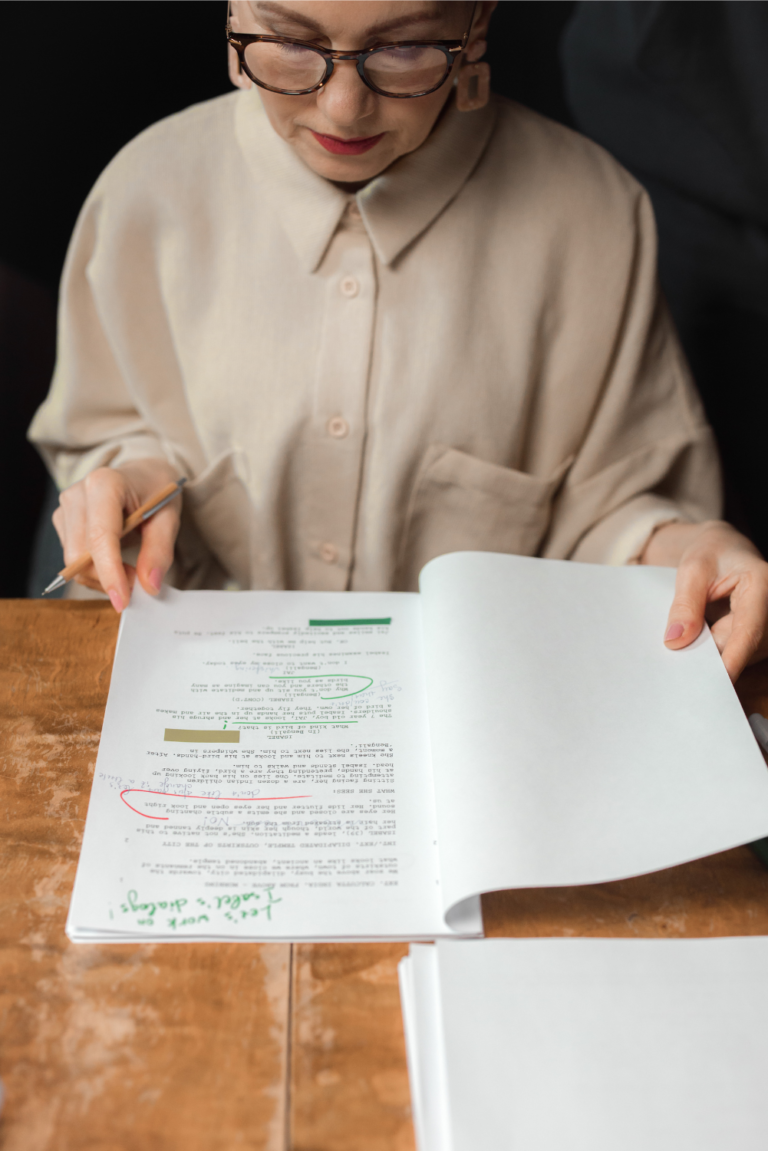

The 5 Stages in the Editorial Process
How your manuscript goes from 1st draft to publication
You’ve done all the hard work: the research, the brainstorming, the late night, first draft writings powered by that ever-faithful cup of Joe. There were moments you never thought you’d finish. But here you are … you’ve tweaked and tightened, and your manuscript is finally just right.
Or is it?
My friend, the work has only just begun.
While getting a manuscript completed will be one of your greatest accomplishments, it’s now time for an editor—or team of editors—to step in and take over the reins. This is where the polish comes in and buffs a glimmering shine to the words you’ve written.
From here, there are 5 different stages you can expect in the editorial process:
1) The Developmental Edit — Think of the developmental edit as the “big picture” edit. This is where a read through of your entire work is done to discover any overarching issues that may be present. For example, are your characters developed? Does each have an arc … and does it complete? Is your plot cohesive, or is it riddle with holes? Will your manuscript be interesting to its intended audience? Or is it dull and in need of an overhaul? A developmental editor will look at your piece of work from the top down, and back up again, making note of bigger issues that will need tweaking and/or rewriting.
2) The Structural Edit — Is the structure of the manuscript you’ve built sound? Structural editors dig deeper into the structure of your work and begin the process of working out any “bigger picture” issues discovered in the developmental edit. Deeper issues with plot, pacing, themes, settings, characters, and writing styles are uncovered and noted.
3) The Line Edit — A line editor looks at the language of your work and how you communicate story. Are there negative patterns you’re falling into as your manuscript moves forward? Are you using repetitive wording, or are your sentences redundant? Is your writing fresh, or are you falling back on overused cliches? A line editor dives deep into the details of your manuscript, line by line, and begins the process of tightening and removing the extraneous.
4) The Copy Edit — A copy editor corrects typographical, spelling, and grammatical errors. Facts will be checked at this stage … and checked again. Consistency is ensured in capitalization, numerals, fonts, and any discrepancies in characters, plots, and settings are finally noted. Once the copy edit is completed, your manuscript moves to the final stage.
5) Proofreading — Once your finalized manuscript has been sent to press, a proof is sent back for a final once over before “running the presses” and printing your book. At this stage, a proofreader will read through your manuscript’s proof, checking for blatant typographical, spelling, and grammatical errors. There are usually few changes at this stage; if there are too many changes, your manuscript may be sent back for rewrites.
Understanding what to expect once your manuscript, article, short story, or essay goes to an editor will help set your mind at ease through every step of the finalizing process